

Philosophy
Adapt, don't impose
No cable is best for every system — only right for one system in one room. Our job is to narrow the field with what can be measured, and let the listening decide the rest.
A chameleon does not change the forest, it changes itself. That is how we think about a cable: it should not carry one character into every system, but disappear inside the particular one it is placed in.
Disappearing takes control. Capacitance, inductance, resistance, impedance — those four decide what a cable does to a signal, and all four can be measured. We publish them for every family, including when the number does us no favours.
But measurement only rules out wrong answers; it does not point at the right one. Two cables with the same figures can still feel different in the same room. So we invite you to listen, once the numbers have done their part.
Four principles
Four things we hold to
01
Measure first, listen second
The numbers narrow ten options to two. The listening picks one of the two. Reversing that order wastes everybody's afternoon.
02
One answer per system
We have no flagship. A dearer cable is not a better cable; it solves a different problem.
03
Add nothing unnecessary
Every added layer is one more interface in the path. If a layer solves no measurable problem, it is not there.
04
Name nothing that already has a name
Cross-braiding is cross-braiding, shielding is shielding. We use the trade's own terms and put no trademark symbol on common knowledge.
Materials
Four materials, each with a measurable reason
- Cold-drawn copper
- Never plated. Each plating is one more interface in the path, and every interface adds contact resistance — a measurable quantity, not a matter of taste.
- Raw silk and linen
- A dielectric constant around 1.3–1.5, against 3.0–3.5 for PVC. At the same geometry, natural-fibre insulation gives markedly lower capacitance.
- Beeswax
- Natural fibre takes up moisture, and water has a very high dielectric constant. The wax is there so capacitance does not drift with the humidity of the room.
- Ash wood
- The spacing former inside speaker cables. Light, non-conductive, and dimensionally stable with humidity — capacitance only stays fixed if the spacing does.
Workshop
Every run leaves with its own numbers
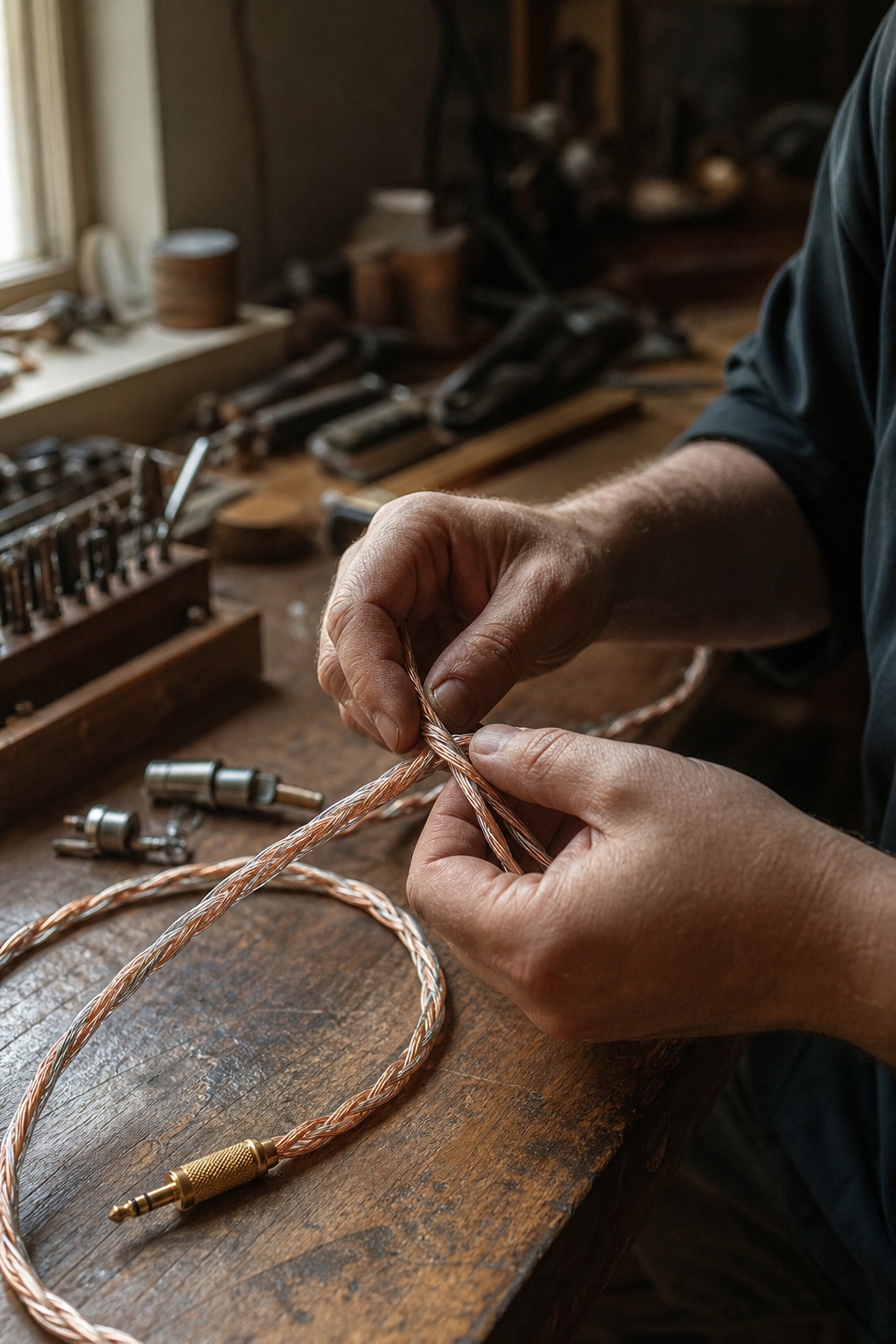
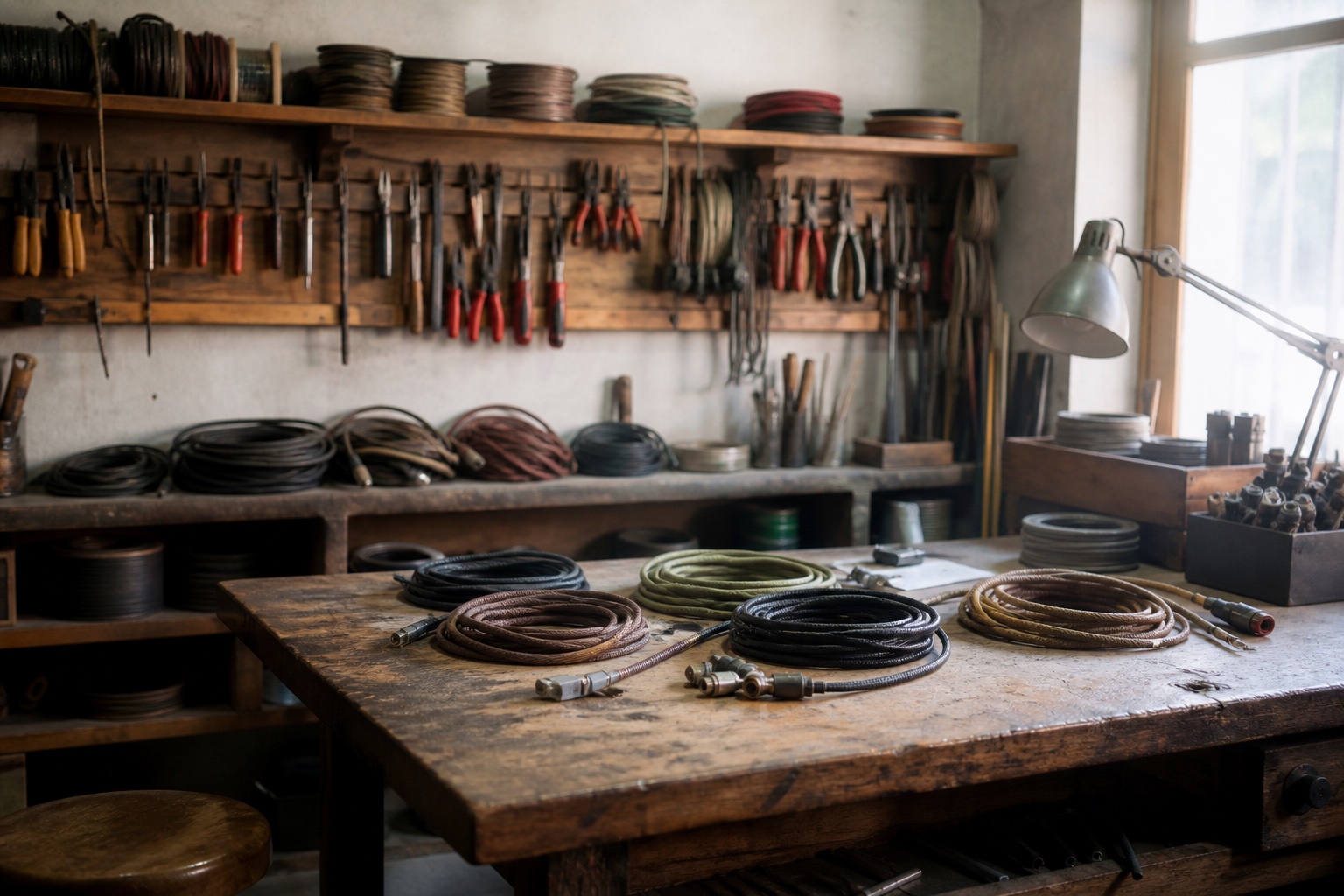
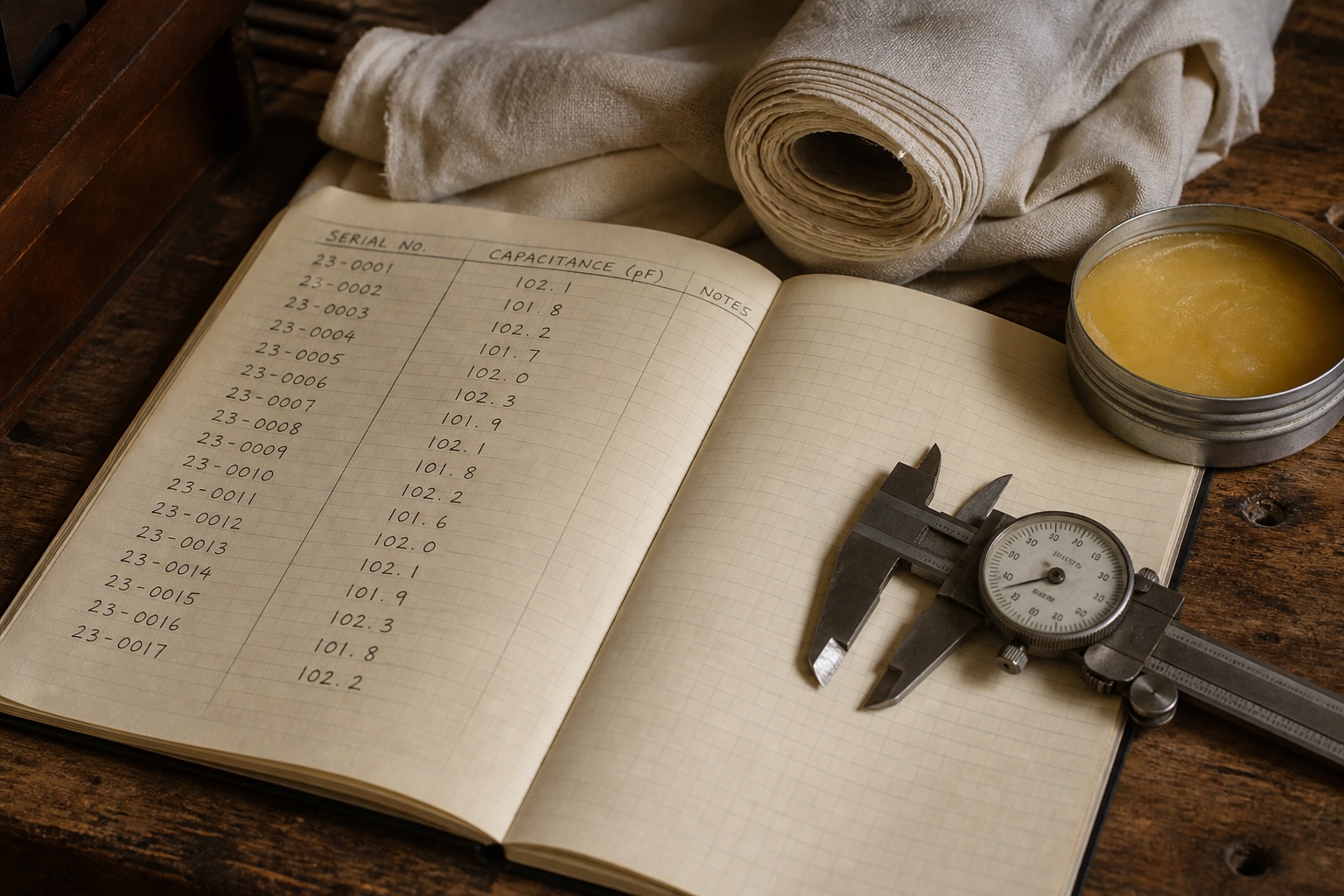
There is no line. Each run is built start to finish by one person, measured, and written into the book against a serial number — and a copy of that page travels with the cable. It caps how many we can make in a month, and we accept the cap.
Listening room
Come and listen first
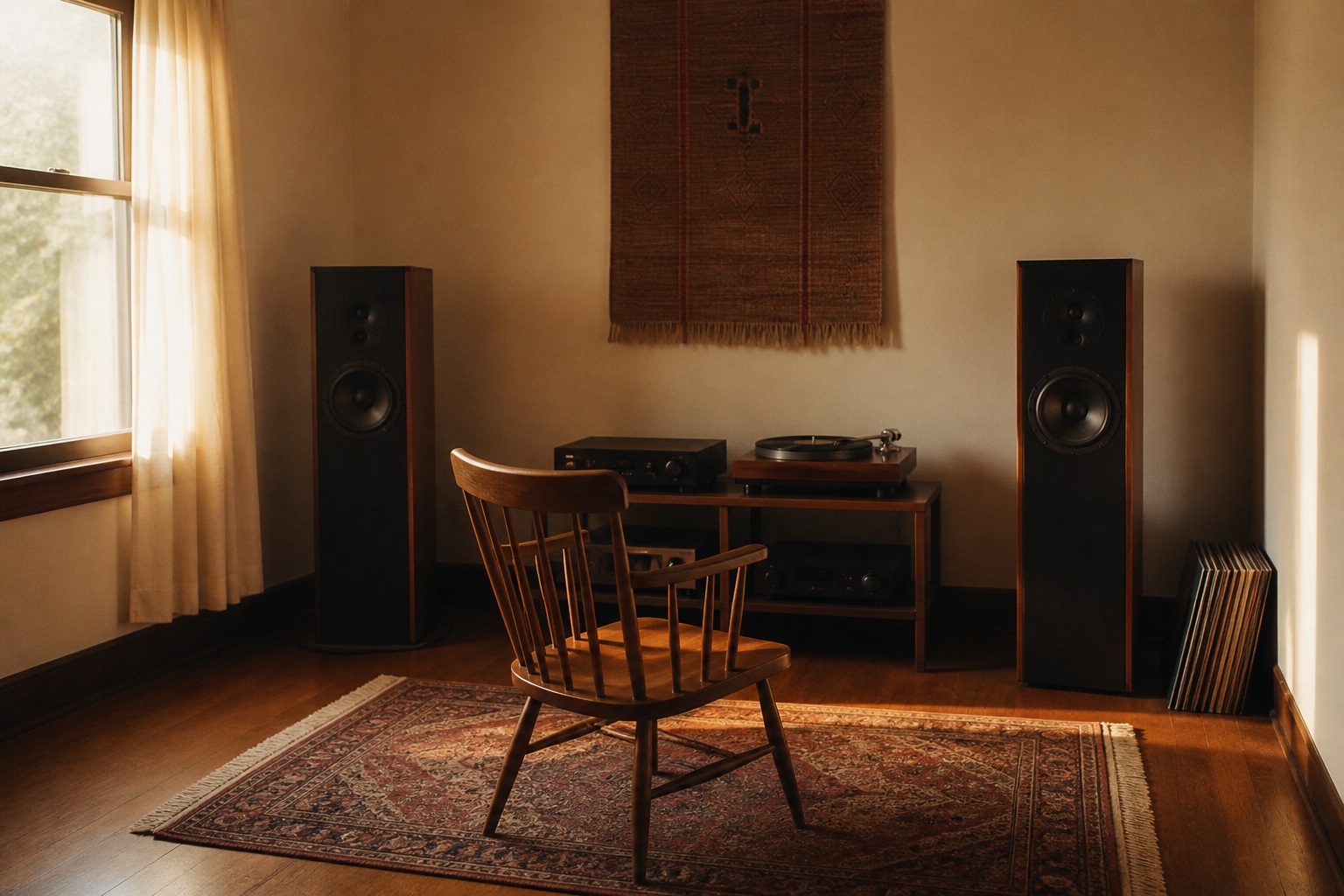
The room opens by appointment, one guest at a time. Bring your own records — and the cable you use now, so the comparison is direct.
Nothing is sold online — every order starts with a conversation.